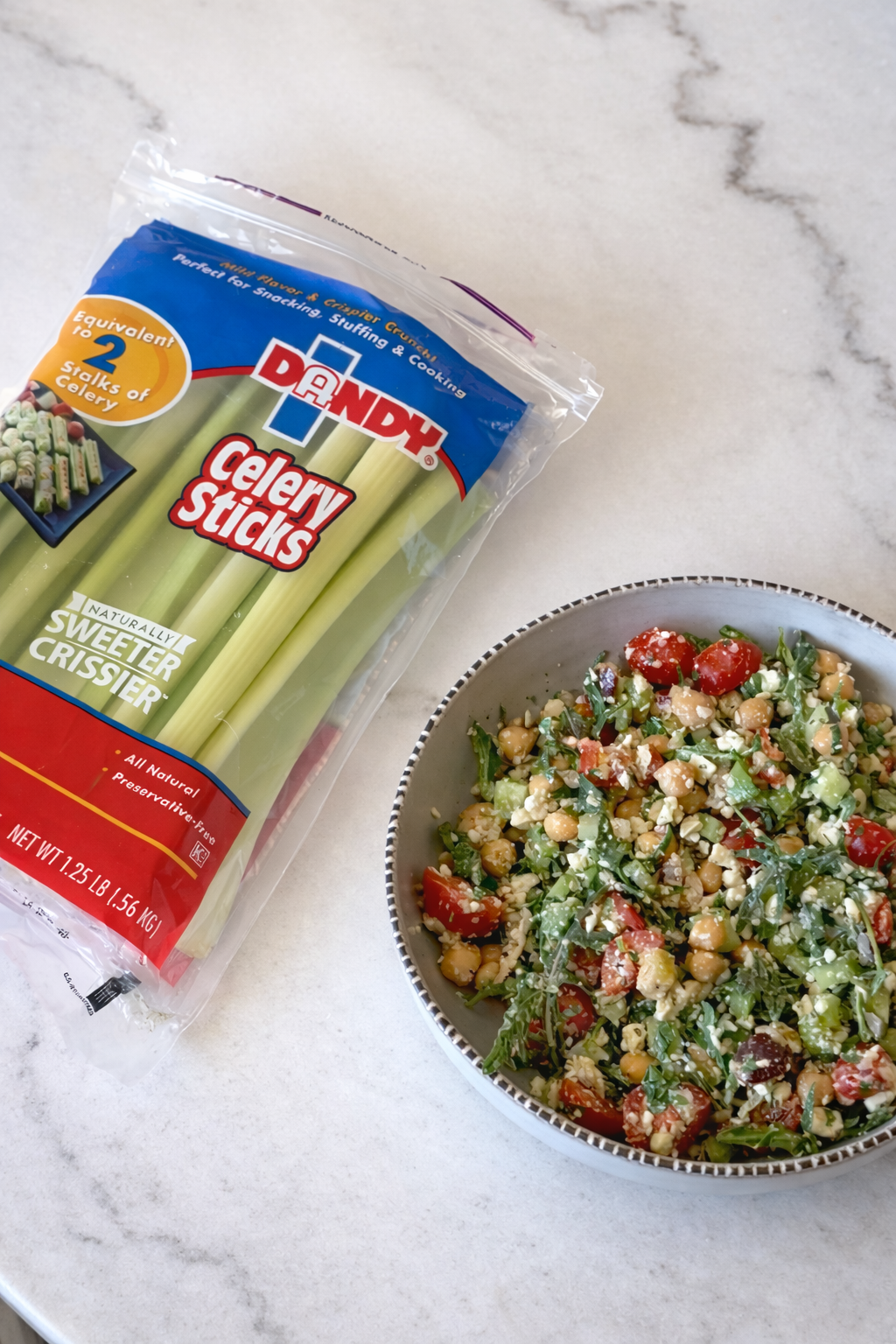
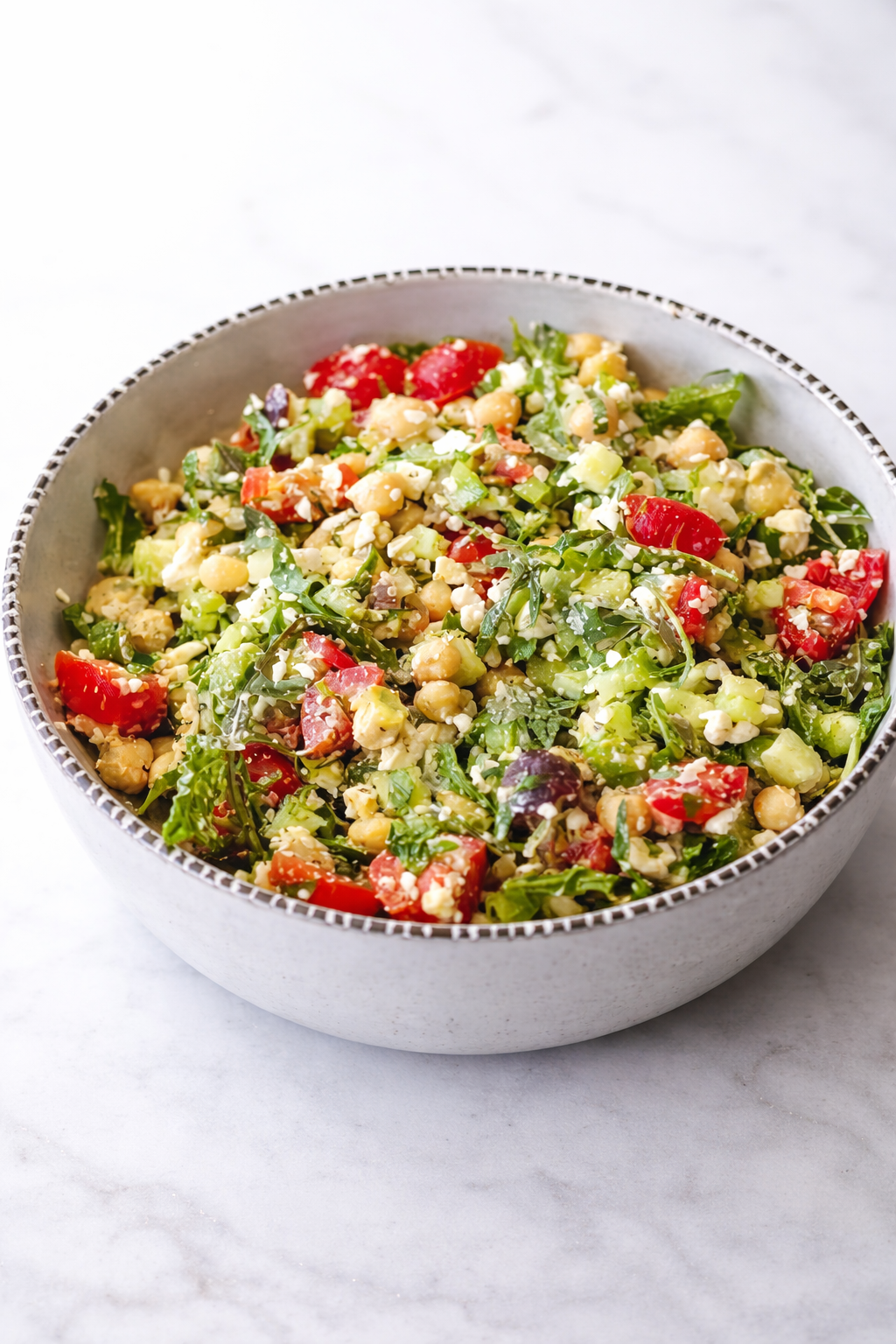
The Digestion-Friendly Mediterranean Dense Chickpea Celery Salad
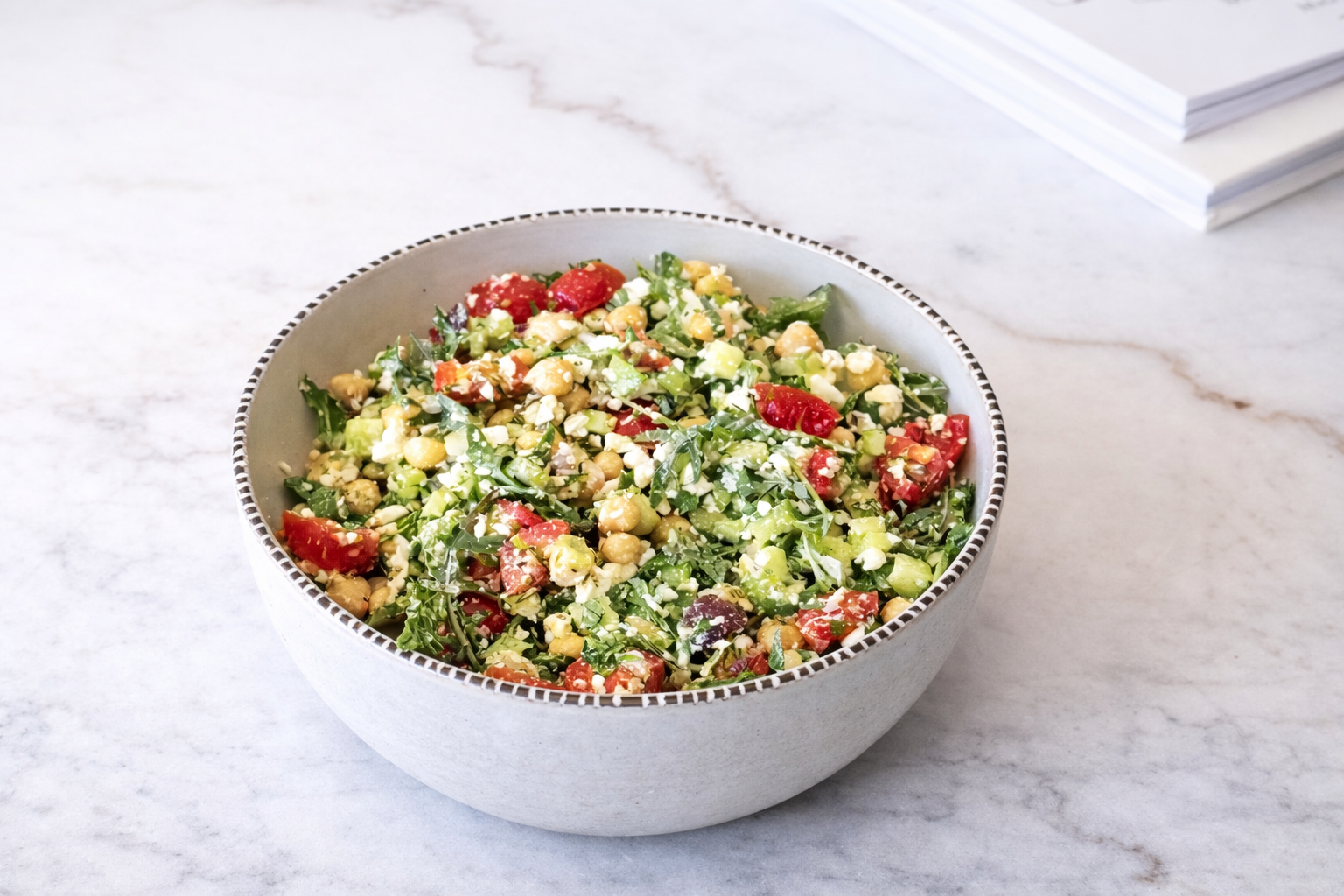
A more balanced take on the viral dense bean salad — designed for digestion and blood sugar support
Dense bean salads are everywhere right now — but most versions miss one important piece: balance.
When fiber is combined with the right amount of fat, hydration, and texture, it becomes much easier on digestion and more supportive for blood sugar.
This is the approach I use in practice — simple adjustments that change how your body responds to a meal.
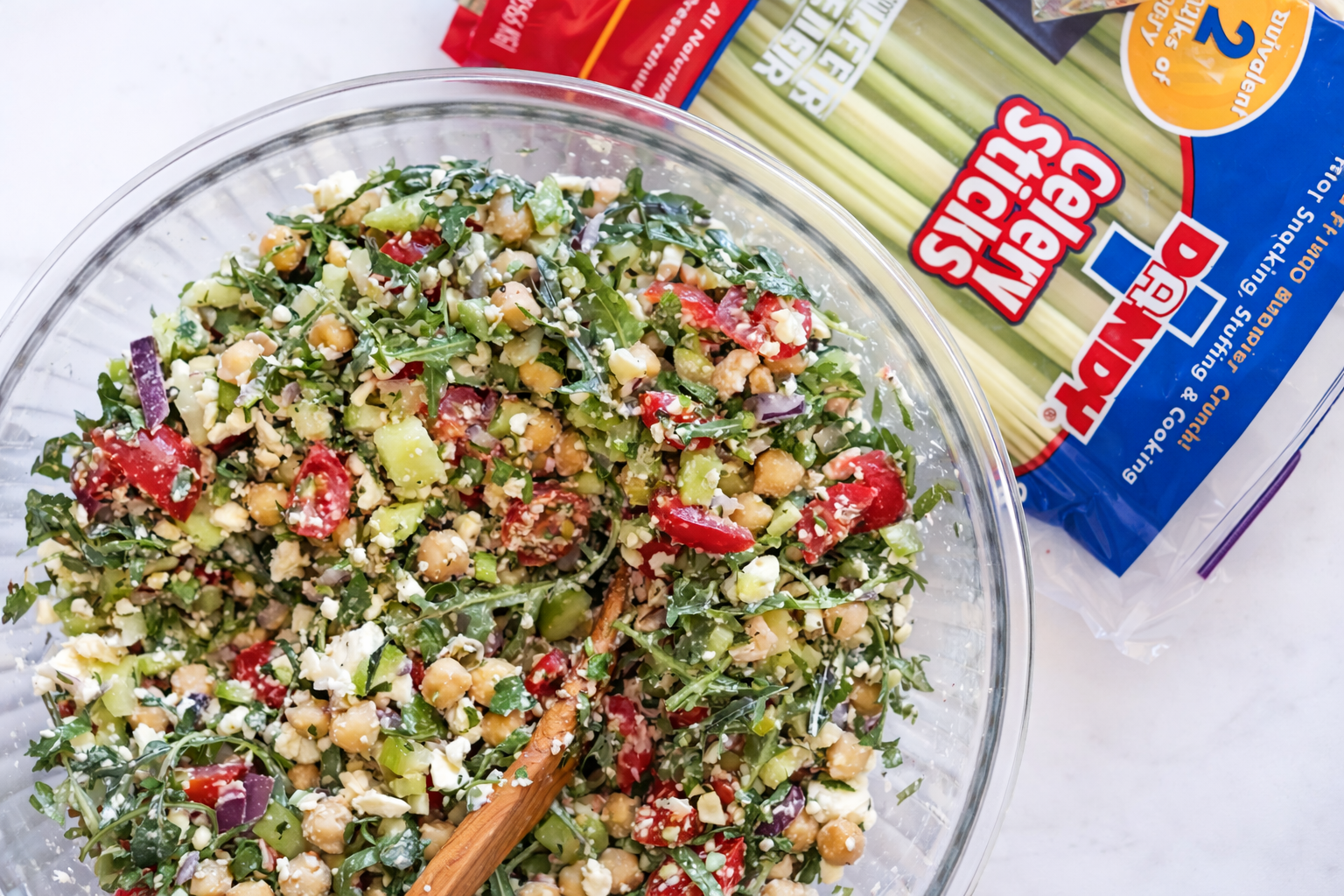
This version is intentionally designed to feel lighter, more balanced, and easier on digestion — while still delivering fiber, plant protein, and flavor.
Perfect for meal prep, but even better after it sits and the flavors come together.
Ingredients
For the salad
1 can chickpeas, drained and rinsed very well
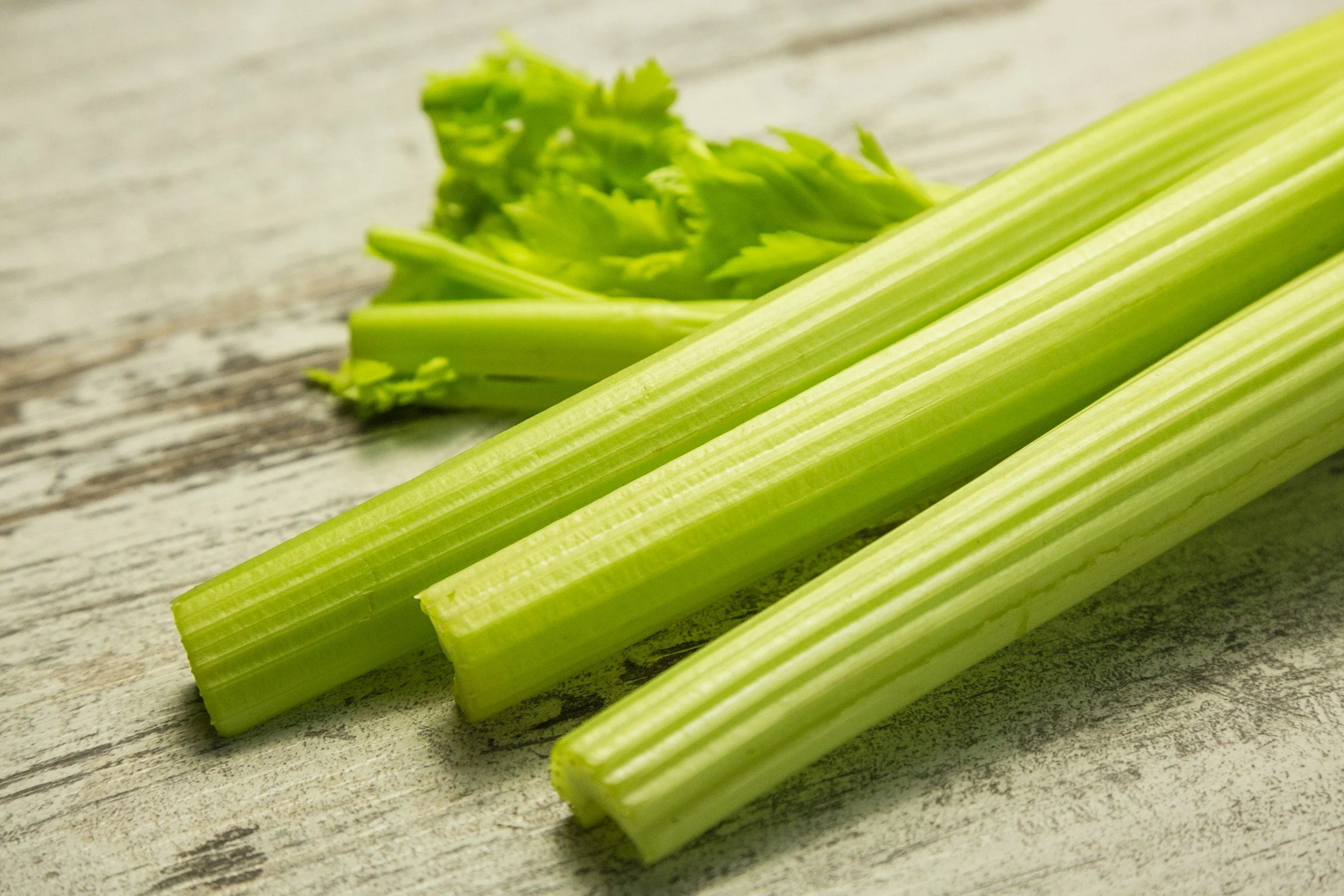
1–1½ cups celery, finely diced (about 2–3 stalks)
½ cup cherry tomatoes, halved or chopped
2 Persian cucumbers, diced
2 tablespoons red onion, very finely diced
6–8 Kalamata olives, sliced
3 pepperoncini peppers, chopped
¼ cup fresh parsley, chopped
1 cup arugula, lightly chopped
⅓ cup feta cheese, crumbled
For the dressing
2 tablespoons olive oil
2 tablespoons lemon juice
1 tablespoon pepperoncini brine
½ teaspoon dried oregano
Black pepper, to taste
Optional: ¼ teaspoon cumin
Optional: 1 teaspoon lemon zest
Step-by-Step Instructions
1. Prepare the chickpeas
Drain and rinse the chickpeas very well under cold water.
This not only removes excess sodium but also helps improve digestibility.
2. Dice the celery
Finely dice the celery so it matches the size of the chickpeas.
This creates a more balanced texture and ensures consistency in every bite.
3. The celery technique
Place the diced celery in a bowl and sprinkle with a small pinch of salt.
Let it sit for about 5 minutes.
This softens the sharpness of raw celery and enhances its natural flavor.
4. Prepare the vegetables
While the celery sits, chop the cherry tomatoes, cucumbers, red onion, olives, and pepperoncini.
5. Build the base
In a large bowl, combine:
chickpeas, celery, tomatoes, cucumbers, red onion, olives, and pepperoncini.
6. Add herbs and feta
Stir in the parsley and feta.
The parsley adds freshness and brightness, while the feta provides a creamy, salty contrast and a small boost of protein.
7. Make the dressing
In a small bowl or jar, whisk together:
olive oil, lemon juice, pepperoncini brine, oregano, and black pepper.
Add cumin and lemon zest if using.
8. Combine
Pour the dressing over the salad and toss until everything is evenly coated.
9. Finish with arugula
Fold in the arugula last to keep it fresh and vibrant.
10. Let it sit
You can serve immediately, but it’s best after 20–30 minutes in the fridge to allow the flavors to develop.
Notes from a functional perspective
Dense bean salads are often very fiber-rich but can feel heavy for some people
Finely chopping ingredients + adding water-rich vegetables (like celery and cucumber) helps balance that
The combination of fiber + fat + a bit of protein makes this more stable for blood sugar compared to beans alone
Tips
Keep celery and cucumber finely diced for the best texture
Add arugula just before serving if prepping ahead
Adjust acidity with extra lemon juice before serving