
The New Food Pyramid: What It Really Means for Women, Hormones, and Family Health
When the new food pyramid began circulating, I didn’t rush to label it good or bad.
What caught my attention wasn’t the image itself — it was how many conversations it sparked. Suddenly, people were talking about protein again. About sugar. About real food. About what we’re feeding our kids and why eating well feels harder than it should.
And that’s where I think the real value is.
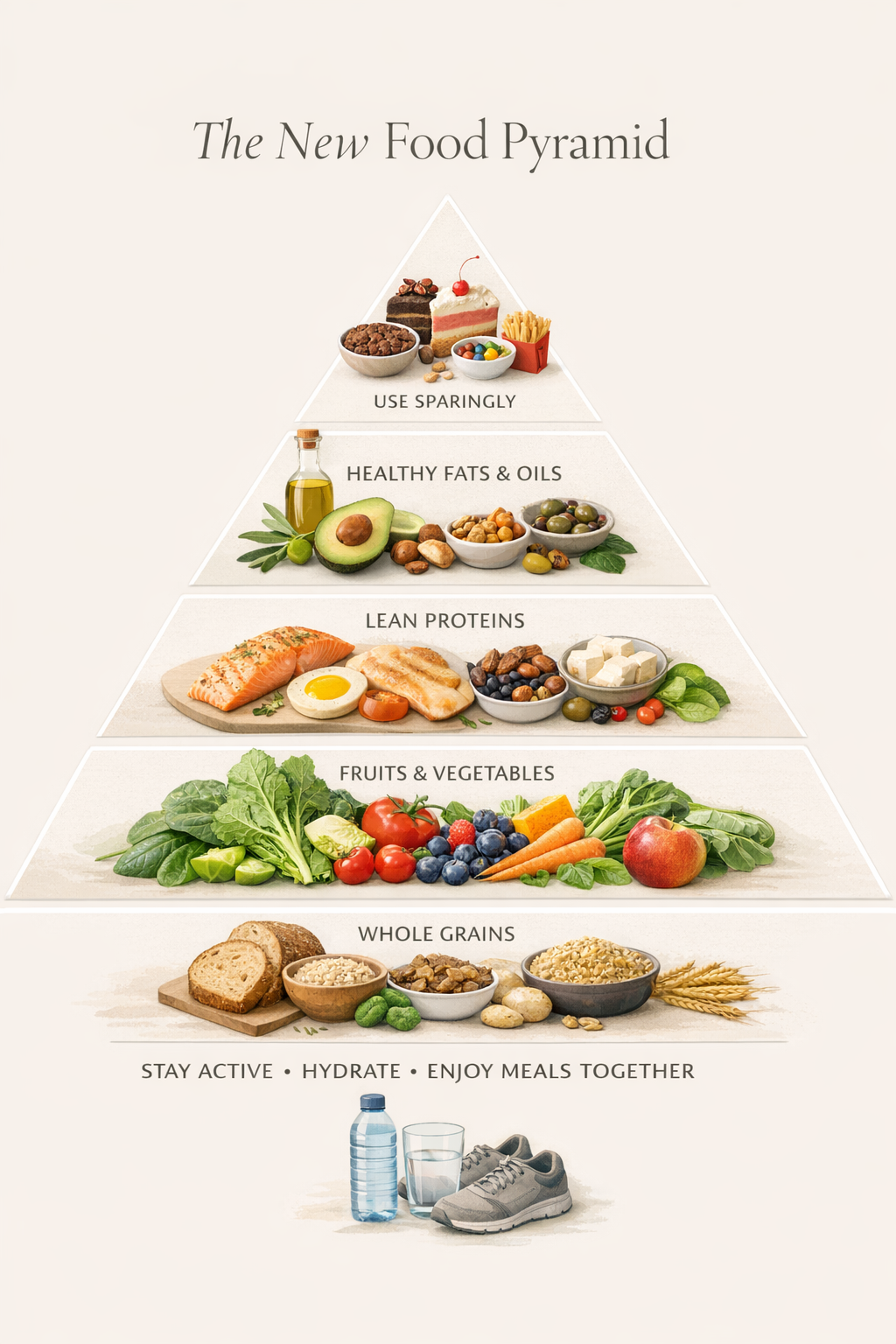
Food pyramids have never changed health on their own.
But awareness can.
Protein: when the numbers finally match real life for women
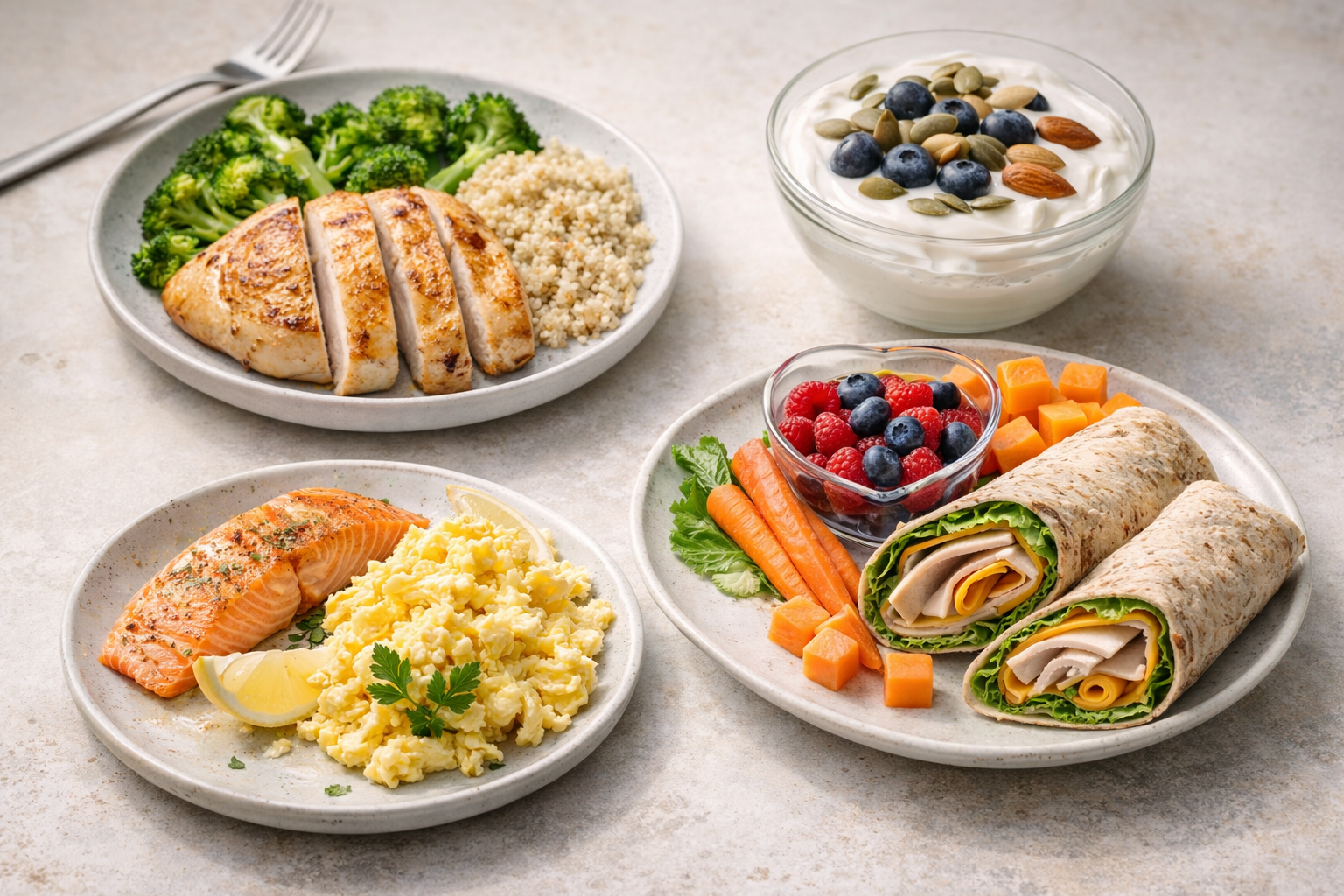
One of the most meaningful updates in the new dietary guidance is protein.
For years, many women were taught to aim for around 0.8 grams of protein per kilogram of body weight per day — a number designed to prevent deficiency, not to support hormones, muscle, or an active lifestyle.
The updated guidance now suggests 1.2–1.6 grams per kilogram per day.
For a woman who weighs about 150 pounds (68 kg), that’s roughly 80–110 grams of protein daily.
Once you see that number, everyday meals start to look different.
That small piece of chicken on the plate?
Half a salmon filet at dinner?
A yogurt with 10 grams of protein meant to last until lunchtime?
They don’t quite add up.
I see this awareness shift happen all the time. Instead of treating protein like a side note, women begin building meals around it — adding eggs to breakfast instead of just toast, choosing a fuller portion of fish at lunch, or making sure dinner actually includes enough protein to support recovery and sleep.
For mothers, this often trickles down to kids as well. Breakfast becomes eggs with fruit instead of just cereal. Lunchboxes include turkey roll-ups, yogurt, or beans alongside fruit — not because it’s “perfect,” but because it keeps kids fuller and more focused.
Protein stops being about restriction and starts being about support.
Healthy fats: less fear, more balance

Fat is another area where the numbers matter — because context replaces confusion.
The guidelines now include fats as part of a healthy diet while recommending that saturated fat stay under 10% of daily calories. For someone eating around 2,000 calories per day, that’s about 20 grams of saturated fat.
Not zero. Not unlimited.
What’s emphasized instead is where fats come from — olive oil, avocado, nuts, seeds, eggs, dairy, and the natural fats that come with whole foods.
For many families, this looks like simple changes: cooking with olive oil instead of avoiding fat altogether, adding avocado to a sandwich, or choosing full-fat yogurt for kids because it’s more satisfying and doesn’t require added sugar to taste good.
Most women don’t feel better when fat is removed. They feel better when meals feel complete.
Is the new food pyramid really that different?
On paper, some argue that it isn’t. Vegetables and fruit are still recommended. Whole grains are still present, often around 2–4 servings per day, depending on needs. Added sugar is more clearly limited, now capped at about 10 grams per meal.
But here’s what is different: people are paying attention.
When nutrition guidance becomes loud enough to spark debate, it reaches people who weren’t thinking about food at all. Parents start noticing how much of their grocery cart is made up of packaged snacks. Women start questioning why they’re tired all the time. Families begin rethinking what “normal” meals look like.
That awareness alone can shift buying habits — often toward fewer ultra-processed foods and more simple ingredients.
And that matters.
Cost, access, and the reality families live in

It would be unrealistic — and unfair — to talk about eating well without acknowledging how hard it can be.
Ultra-processed foods are cheap, shelf-stable, and everywhere. Whole foods often cost more upfront and require time and planning.
This isn’t a willpower problem.
It’s a system problem.
Health doesn’t improve through perfection. It improves through direction. Sometimes that direction looks like frozen vegetables instead of fresh. Eggs instead of sugary cereal. A simple dinner cooked twice a week instead of every night.
Small, repeatable changes matter more than idealized diets.
SNAP, guidelines, and what policy can and can’t do
The new food pyramid doesn’t automatically change what families using SNAP benefits can purchase.
Some states are beginning to restrict items like soda or candy, but access, affordability, and education still shape outcomes far more than a graphic.
Guidelines can set direction and influence conversation.
They can’t fix food deserts or grocery prices on their own.
But conversation is where change begins.
Sustainability: looking beyond the image

A lot of sustainability concerns come from the visual emphasis on protein and dairy.
This is where it’s important to read the wording, not just the picture.
The guidance emphasizes variety, balance, and minimizing ultra-processed foods — not rigid, animal-heavy eating. Protein includes both animal and plant sources.
From an environmental standpoint, a diet built mostly from real food — whether protein comes from fish, eggs, dairy, legumes, or meat — is often more sustainable than one dominated by ultra-processed products.
Sustainability lives in nuance, not extremes.
What I actually hope this moment creates
I don’t expect a food pyramid to fix hormones, metabolism, or family health.
But if it helps a woman realize she needs 80–100 grams of protein, not a symbolic portion…
If it helps parents rethink breakfast, lunchboxes, or dinner routines…
If it nudges families toward fewer ultra-processed foods and more real meals…
That matters.
Nutrition doesn’t change through rules alone.
It changes when awareness meets real life — and slowly becomes habit.
That’s where health actually begins.

Frequently Asked Questions
-
Current dietary guidance suggests women benefit from eating 1.2–1.6 grams of protein per kilogram of body weight per day. For many women, this equals roughly 80–110 grams of protein daily, depending on body size, activity level, and life stage.
This amount supports stable blood sugar, muscle and bone health, satiety, and hormonal balance, especially when protein is spread evenly across meals rather than saved for dinner.
-
The updated guidance reflects what many clinicians and researchers have observed for years: most women are under-eating protein, particularly earlier in the day.
Higher protein intake helps women feel more energized, reduces cravings, supports metabolism, and better matches the demands of modern life, including stress, exercise, pregnancy, postpartum recovery, and perimenopause.
-
The new food pyramid emphasizes real, minimally processed foods, adequate protein, healthy fats, and reduced added sugar. These principles generally support metabolic and overall health.
That said, the pyramid should be viewed as a framework, not a rigid rulebook. Individual needs vary based on hormones, lifestyle, activity level, and access to food, so personalization still matters.
-
For many women, yes. The updated guidance supports hormonal health by encouraging:
adequate protein intake
inclusion of healthy fats
lower reliance on ultra-processed foods and added sugars
These shifts can help stabilize blood sugar, improve satiety, and reduce stress on the hormonal system when applied consistently and realistically.
-
No. Whole grains and carbohydrates are still included, generally around 2–4 servings per day, depending on calorie and energy needs.
The focus is on quality and balance, prioritizing fiber-rich, minimally processed carbohydrates rather than refined or ultra-processed options.
-
The food pyramid alone does not automatically change SNAP purchasing rules. However, some states are beginning to explore restrictions on items like soda or candy, while encouraging healthier options.
Access, affordability, and education still play a much larger role than a single graphic, but increased attention to food quality may influence future policy and purchasing patterns over time.