
Raspberry Coconut Power Bites
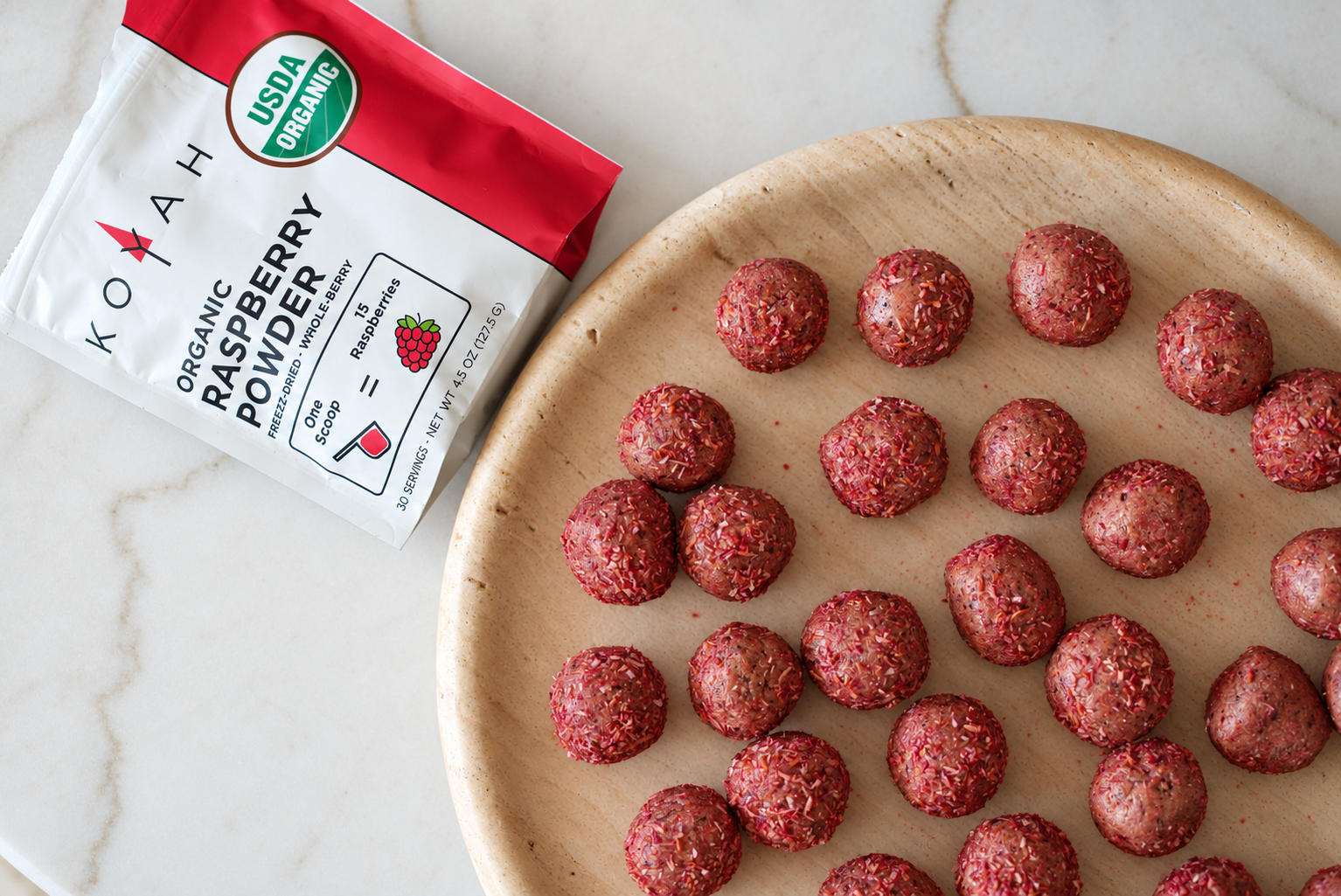
An easy make-ahead snack for lunchboxes, busy afternoons, and pre-workout fuel
Prep time: 15 minutes
Chill time: 20–30 minutes
Yield: Approximately 28–32 small bites
This recipe was created in partnership with KOYAH. All opinions are my own.
This post contains Amazon affiliate links. As an Amazon Associate I earn from qualifying purchases.
There are snacks that sound nourishing but leave you hungry again twenty minutes later—and then there are the recipes you make once and immediately know you will keep in rotation.
These raspberry coconut power bites have become the second kind in our house.
I originally made them as an easy addition to the girls’ lunchboxes: something slightly sweet, easy to pack, and satisfying enough to carry them through a busy school day. But they are just as useful for adults. I keep them in the refrigerator for rushed afternoons, before a strength-training session, or whenever I need something more substantial than a piece of fruit but do not want a full meal.
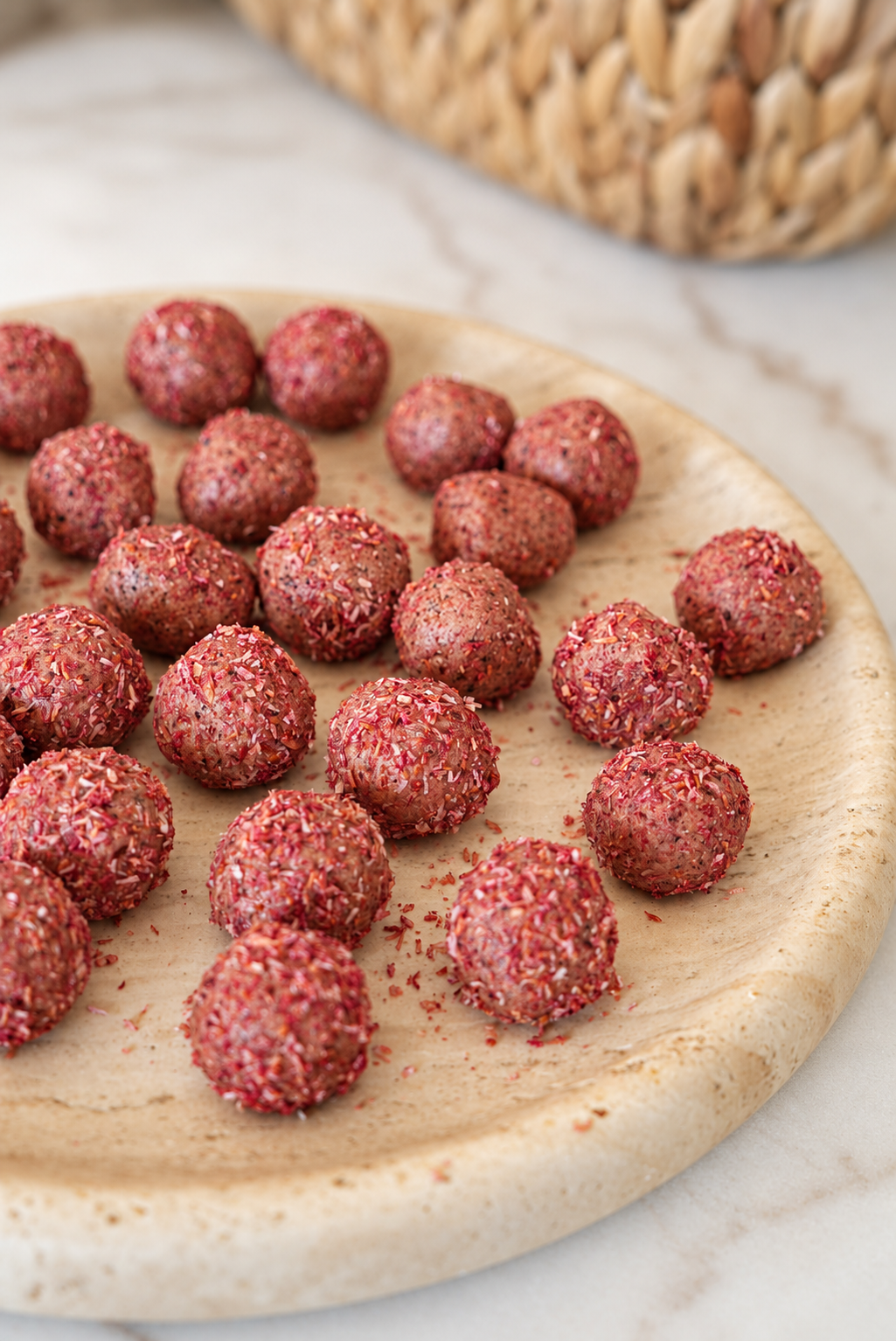
They are made with creamy cashew butter, almond flour, ground flaxseed, collagen, coconut, maple syrup, and KOYAH Organic Raspberry Powder. The result is soft, lightly sweet, pleasantly tart, and naturally pink—without artificial coloring or flavoring.
Why this combination works
A more complete snack than carbohydrate alone
Maple syrup and raspberry provide carbohydrate, while cashew butter, almond flour, coconut, flaxseed, and collagen add varying amounts of fat, fiber, and protein.
That combination generally digests more gradually than a comparable amount of rapidly absorbed carbohydrate eaten alone. In practical terms, it can provide steadier energy and greater satisfaction than grabbing something made primarily from sugar.
I deliberately avoid promising that any single recipe will “balance blood sugar.” Glucose responses are individual, and these bites still contain maple syrup. What we can say is that pairing carbohydrate with fat, fiber, and protein changes the composition of the snack and may moderate the speed of digestion and glucose absorption compared with carbohydrate by itself.
What the flaxseed contributes
Ground flaxseed is doing more than helping the bites hold together. It provides dietary fiber, plant-based alpha-linolenic acid (ALA), and lignans. ALA is an essential omega-3 fatty acid, meaning the body cannot make it and must obtain it from food.
Using ground flaxseed matters. Whole flaxseeds may pass through the digestive system without being fully broken down, while grinding makes more of their nutrients accessible and also helps the flax absorb moisture in the recipe.
Research has found that larger amounts of ground flaxseed can reduce the post-meal glucose response in certain populations. That does not mean one or two of these bites will reproduce the same clinical effect—the amount of flax per serving is much smaller—but it supports the broader reason I like including flax in mixed snacks rather than making exaggerated claims about it.
If you grind whole flaxseeds yourself, grind only what you need and keep the remainder tightly sealed in the refrigerator or freezer.
Why use raspberry powder?
Fresh raspberries are wonderful, but they add too much moisture to this particular recipe and do not travel especially well in a lunchbox.
KOYAH Organic Raspberry Powder is made from one ingredient: whole organic raspberries that are freeze-dried and ground into a powder. According to KOYAH, one scoop is made from approximately 15 fresh raspberries. The powder gives the bites concentrated raspberry flavor and their naturally beautiful color without adding artificial dyes or flavoring.
It is also what makes this recipe easy to prepare year-round, even when fresh raspberries are expensive, out of season, or likely to become crushed at the bottom of a school bag.
A note about collagen
Collagen adds protein and helps create the soft, dough-like texture. It is especially rich in amino acids associated with connective tissue, including glycine and proline.
However, collagen is not a complete replacement for a high-quality protein source at a meal, and it is relatively low in leucine—the amino acid that plays an important role in stimulating muscle protein synthesis. Think of the collagen here as an ingredient that adds some protein and supports the texture, not as the entire protein strategy for your day or your post-workout recovery.
Are these good before a workout?
They can be—especially when you need convenient fuel and have enough time to digest them.
One or two bites approximately 60–120 minutes before strength training or a moderate workout provide a mix of carbohydrate, fat, and a little protein. This can work well for someone who does not want a full meal but also does not feel good training on an empty stomach.
Timing and tolerance matter. Because cashew butter, coconut, almond flour, and flaxseed make these relatively high in fat and fiber, they are not designed to be rapid fuel five or ten minutes before an intense workout. If you are eating very close to training, doing long-duration endurance exercise, or need fast carbohydrate, a banana, toast, dates, or another easier-to-digest carbohydrate may be the better choice.
These bites are also not necessarily enough to fuel a long or demanding session by themselves. Use them as one flexible option within an adequately fueled day—not as a way to make the smallest possible snack carry the workload of a full meal.
The recipe
Ingredients
1 cup Nutiva organic unsweetened shredded coconut, divided
2 teaspoons Simply Organic vanilla extract
½ teaspoon Simply Organic almond extract
¼ teaspoon Redmond Real Salt
Useful tools and lunchbox storage
OXO Good Grips small cookie scoop for evenly sized bites
U-Konserve stainless-steel snack containers for packing them in a lunchbox
Unbleached parchment paper for toasting the coconut and separating frozen layers
Instructions
Toast the coconut. Preheat the oven to 350°F. Spread the shredded coconut in a thin layer on a parchment-lined baking sheet. Toast for approximately 3–6 minutes, watching it closely and stirring once, until it is lightly golden. Coconut can move from golden to burned quickly, so do not walk away. Allow it to cool completely.
Prepare the flaxseed. If you purchased whole flaxseeds, grind them into a fine meal in a high-speed blender or spice grinder before measuring.
Combine the wet ingredients. In a large bowl, stir together the cashew butter, maple syrup, vanilla extract, and almond extract until smooth.
Add the dry ingredients. Add the almond flour, ground flaxseed, collagen peptides, raspberry powder, sea salt, and approximately half of the toasted coconut. Mix until a soft, evenly colored dough forms.
Adjust the texture if needed. Cashew butter varies considerably by brand. If the mixture is too soft to roll, add almond flour one tablespoon at a time. If it feels dry or crumbly, add cashew butter one tablespoon at a time.
Chill. Refrigerate the mixture for 20–30 minutes. This makes it easier to shape.
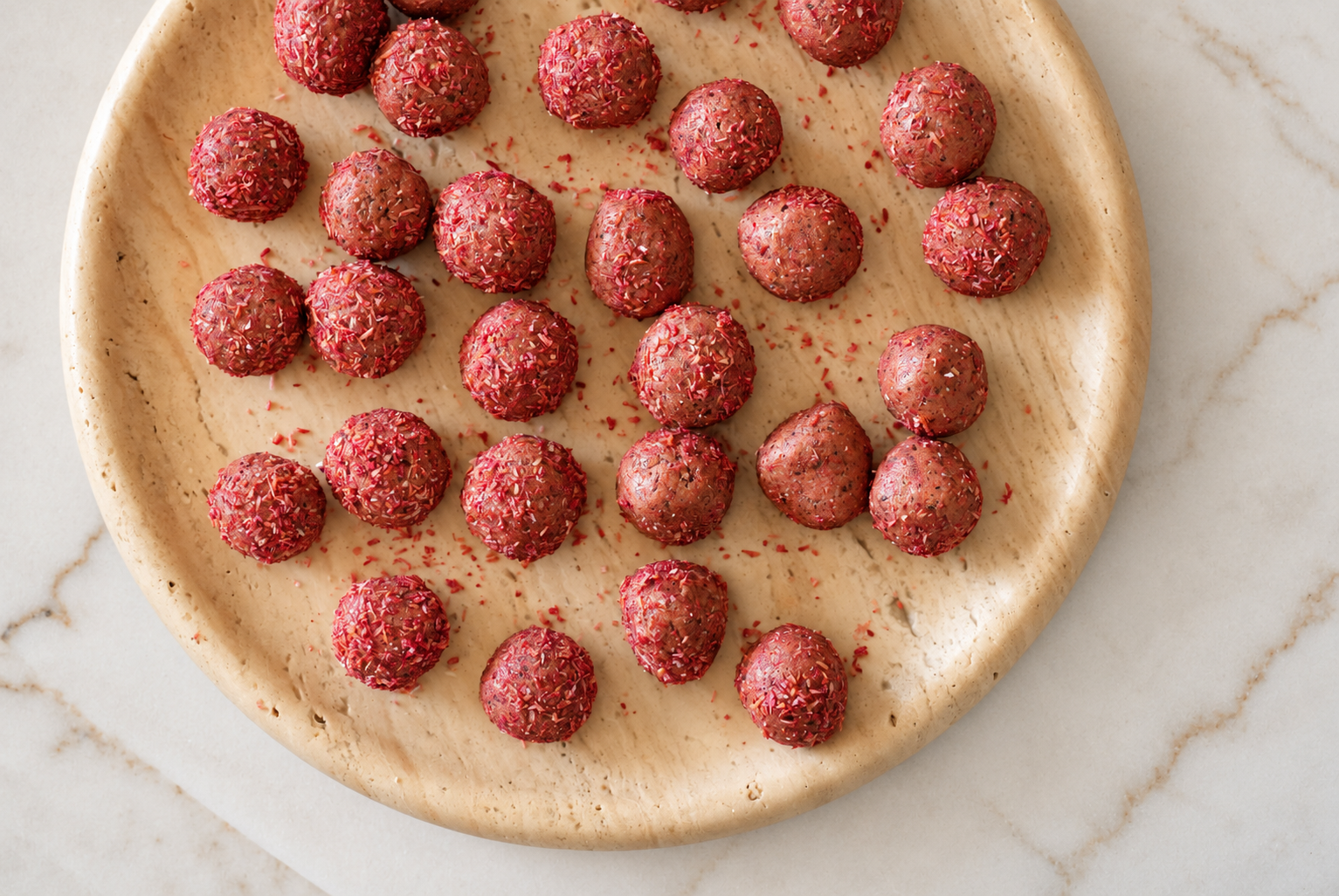
Roll. Scoop and roll the mixture into approximately 28–32 small balls.
Coat. For the pink coconut coating shown in the reel, combine the remaining toasted coconut with a small additional sprinkle of raspberry powder. Roll each bite lightly in the mixture.
Set. Refrigerate until firm, then transfer to an airtight container.
Storage and lunchbox notes
Store the bites in an airtight container in the refrigerator for 5–7 days. For longer storage, freeze them for up to 2 months, separating layers with parchment paper. Let frozen bites soften for about 10–15 minutes before eating or move the next day’s portion to the refrigerator the night before.
For lunchboxes, I prefer packing them with a cold pack so they stay firm and fresh.
This recipe contains cashews and almonds. It is appropriate only if your child’s school permits nuts and it is safe for your child. If the classroom or school is nut-free, do not send this exact version. A sunflower-seed-butter and oat-flour adaptation may work, but the flavor and texture will be different and the quantities should be tested before sharing it as an equivalent recipe.
Easy ways to use them
Add one or two to a lunchbox alongside a balanced meal.
Pair one with fruit for an after-school snack.
Eat one or two 60–120 minutes before a moderate workout, depending on your digestion and the rest of your day’s intake.
Keep a batch refrigerated for busy afternoons when you need something more substantial than coffee.
Freeze them in small portions so you do not need to make a fresh batch every week.
Make them smaller for younger children or slightly larger for an adult snack.
That versatility is the real reason I like this recipe. It is not trying to be a perfect food or replace a meal. It is simply an easy, flavorful way to combine real ingredients into something the whole family is genuinely excited to eat.
Recipe notes
Cashew butter: Use a smooth, drippy cashew butter. A very dry or thick brand will change the texture.
Raspberry intensity: For a softer raspberry flavor, begin with 3 tablespoons of powder. For the color and flavor shown here, use the full ¼ cup.
Sweetness: The raspberry powder is naturally tart. The maple syrup balances it without making the bites taste overly sweet.
Collagen: Scoop sizes vary by brand, so measure ½ cup rather than relying on “four scoops.”
Flaxseed: Measure after grinding if starting with whole seeds.
Serving size: There is no universal serving size. One or two bites may be appropriate depending on age, appetite, training, and what else is being eaten.